Showing posts with label guest. Show all posts

Tuesday, March 10, 2026

Distinction matters...

 Over on FB, Luna Shimada made a post giving the history of her father's Parasol act and how it differs from the modern umbrella act. I asked her if I could share it here and she graciously said yes. So if you are into some history, kick right back and you'll hear a tale... 

_________________________________________________________________________
 
In 1968 my family and I were traveling all over the world and we ended up in Mexico City. It was my mother’s idea to create a magic act that drew on my father’s Japanese culture. So they went back to Japan and purchased a number of traditional Japanese paper parasols and materials.
Japanese parasols are different from the umbrellas many magicians use today. They are made of paper and bamboo, sometimes silk. This distinction is important.
 
My parents began creating what became their very original parasol manipulation act. Up to that point nobody in the world had really seen anything quite like it.
 
My father had been performing a dove act when he met my mother, and at that time many acts followed what magicians call the diminish and return concept. A particular object, whether it was a bird, a bottle, or something else, would be the recurring theme throughout the act, multiplying, vanishing, and reappearing in different ways. That structure was very common in magic of that era.
 
My mother thought, you produce all these doves, why not parasols. They are larger, more visual, connected to your culture, and artistically beautiful. It was a natural evolution of the diminish and return idea, but expressed through Japanese imagery and aesthetics.
That was the beginning of something entirely new.
 
 
The act quickly took them across international stages and gained attention and recognition. When they returned to Japan and performed it on national television, a young magician approached them. He had been inspired by their parasol act and asked if it would be acceptable for him to develop a version of the idea in Western style, performing in tails and producing Western rain umbrellas rather than Japanese parasols.
 
At the time my parents thought it was an interesting concept, though artistically quite different. Producing rain umbrellas did not carry the same cultural aesthetic as traditional parasols. But they were artists, not territorial people, and they did not see it as competition. So they gave their blessing.
 
That young magician was Fukai.
 
Fukai went on to develop what became the well known umbrella manipulation act using specially designed umbrellas that are much smaller than traditional parasols. Because these umbrellas were engineered specifically for magicians and later manufactured and distributed within the magic community, the umbrella act became extremely popular and widely performed.
 
The important historical point is this. The Shimada Japanese parasol act came first. Fukai’s umbrella act was inspired by that original concept but adapted into a Western performance style with different props, music, and staging. It is not THE parasol act. It is a parasol act adjacent utilizing different materials. 
Japanese parasols and Fukai umbrellas are actually very different instruments. Parasols are larger, more rigid, and do not collapse nearly as small as the umbrellas designed for manipulation. Working with them requires a different handling and stage presence.
 
And just to be clear, there has never been any conflict between our families. I have great respect for Fukai and Kimika. They are wonderful people and my parents were fond of them as well. Our paths simply developed in different directions.
 
Fukai chose to manufacture and share his umbrellas widely with the magic community.
The Shimada family took a different path. Our handling and techniques were passed down through personal mentorship, teacher to student, in order to preserve the integrity, history, and lineage of the act.
 
Many years later, I went on to create my own parasol act that was drawing on the traditions of my father's act, but I modernized it, re-conceptualize the presentation, and even created my own techniques which needed to evolve due to different costuming and different criterias. This version of the parasol act became solely my own creation and skill set. I took my father's work and adapted it to my own style..
 
 
Still using the traditional Japanese parasols, though not umbrellas.
Today many magicians refer to umbrella manipulation as the parasol act, but technically speaking they are not the same thing at all. To most performers it may seem like a small semantic difference.
 
But to artists and to magic history the distinction matters.
 
____________________________________________________________________________
 
As a side note, I always liked Luna's Parasol act as it had a subtle story of a universe being created and I thought that was cool. She also has shared some of how the act worked over the years and there is some clever stuff in it. 
 

Tuesday, December 06, 2022

Not stirred...

Today I bring you a pseudo-guest post.This was a previous post elsewhere by Lee Presson of "Lee Presson and the Nails" that I have obtained permission to re-post here. (Also don't forget to check out their music over here if you like bad ass swing music.)

Vermouth

"This is a tough one to try and describe, but I'll do my best.  I've often compared research for any theatrical endeavor to the vermouth in a martini.  You pour it in, you swish it around, you dump it out.  Then you put in something completely different, be it gin or vodka, but the hint of that vermouth still remains. So with that metaphor in mind, let's take LPN as an example: I immersed myself in Jazz history, I learned as much about it as I could, I listened to as much of it as I could... and then I dumped it all out and tried to develop an original stage presentation.  But the hint of all that history is still there, see? (also the 70 year-old songs help)

Or say, Edgar Allan Poe at Dickens Fair.  I obviously can't play him as he actually was because this is supposed to be a Christmas fair... a CHEERY occasion!  So, same thing... do the research, learn as much as I can, then toss it all and ask myself the following question: given what I know about this man, how would he behave at a party if he were given the chance to forget about his inner demons for just a few hours?  I think he'd be grateful for the opportunity, and that's how I play him. 

There are two ways to play a character.  One is to pretend you're the character, and the other is to pretend the character is you.  I choose the 2nd approach.  Take the role and make it yours.  Just don't forget the vermouth!"

A little bit of everything...

 
This is a great way to think about taking something and making it your own after learning about what has come before. The history of an art is import if for no other reason than to know you are not wasting your time re-creating someone else's wheel. It's also good to know the "Rules" of something so you can then bend, break, and discard the ones that don't apply to you or what you are doing. 

The problems lies in those who don't think they don't need this knowledge and they end up being a pale comparison of something that came before them because they never bothered to research in a time when it's easier than it ever was. 

It's never too late to take a look behind you... 

Saturday, August 01, 2015

They call her Billy "Guest Column" Kidd...

In a recent issue of Vanish Magazine I wrote an article asking some different female magi about various things. One of the performers I talked to was Billy Kidd. One of her answers intrigued me and I asked her to expound upon it to publish here.

Thus...
I think magicians need to learn how to be more aware of themselves on stage and more aware of their audiences. If you are a solo act  you should always be listening to your audience. They will give you secret information as to when to say your next line, when to do your next sneaky move, when to say the punch line to your joke and so on. If you are a double act, learning to actively listen to your partner on stage is equally important. I don't mean just listening for your cue... actively listening and reacting to whats going on around you. This will naturally put you "in the moment" during every performance making things seem fresh and spontaneous. This also allows the magician to improv and react accordingly which is what clowns do all the time. Which in return might give you new material that actually comes out of something spontaneous.  But how does one learn how to do this? Well its not going to happen in front of your mirror. 
The amount of hours and time one puts into practicing their sleight of hand should be the equal amount of time one should put into there stage time/actual performance time. Sadly this is not the case for most magicians. I think this is why some of the public consider magic cheesy, and unappealing at times is  because they are actually witnessing bad performers and not bad magic.
Sometimes I think magicians think that being a good performer just means talk loudly and do facial contortions and mug to the audience. Blagh. I know our books say video tape your self and watch what you do. This isn't just to see what angles are best. Listen to what you are saying and when you say it. Are you repeating lines as transitions because you have no idea what else to say? How many times do you say the word " actually...." or  " and now for my next trick...."  or " you know what..." etc. Watch yourself on camera and ask yourself if you can stand on stage without moving or holding something and still be equally engaging. And if you are not getting booked and have nowhere to practice stage time then make it happen yourself. Go out and street perform, do open mic nights, create your own theatre even if its in your back yard. Just go out and DO IT!

Magic is such a technical art form in one sense. I think one of the most important things we forget to do as adults is keeping in the essence of play. If we can unlearn how to be an adult on stage you can find so much freedom within your magic to make things more memorable and stronger for your audiences. Its so easy for us to copy patter word for word in the book or watching the DVD. So how do you make those classic tricks unique to your performances? How do you create something new even if its from something old? Play. But to Play you have to know so much about your habits and who you are as a person and magician. Violist Stephen Nachmanovitch says " To create, we need both technique and freedom from technique. To this end we practice until our skills become unconscious."  Then there is the argument of are you a magician that entertains OR an entertainer that does magic? Ugggh.... to this I say F*** off! You should be doing both equally and just as importantly. Unfortunately our concern over the technique takes over everything. We should be able to take our technique and basic sleights for that matter, personalize it until it engages people rather than relying on the store bought gimmick that will make you a superstar on the internet over night. 

I have been working professionally in theatre since I was 12 years old and have been fortunate enough to work with some of the top actors in Canada. When I got involved with magic and started meeting magicians I looked up to everybody and every bit of knowledge they were willing to share. People were very generous in telling me what books to read how to practice certain sleights and what not. For that I am forever grateful. When I first started watching magic shows and competitions at conventions I didn't understand why it felt like I was watching a high school drama production. Until I realized that lots of magicians don't create enough stage time for themselves, are unaware of who they are as a performer, and are too concentrated on the technical side of things. Are magicians merely actors who are playing the part of magicians? I think we should be but are not quite there yet.

Thursday, June 11, 2015

Guest Article: Slave Labor

For long time readers, you know that from time to time I have some guest articles pop up. Friend of the feed, Aaron Stone (proprietor of Fearless Portraits), was asked to lay down some of his thoughts on a subject we had talked about in passing. With a little... encouragement, he got it finished for your perusal.
------------------------------------------------------------------------

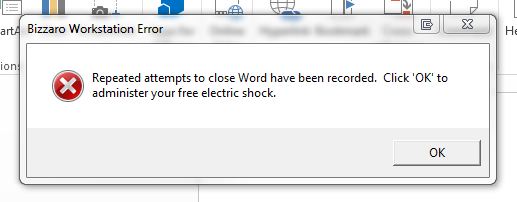
I’m chained to a desk made of razorblades, surrounded by barbed wire, armed thugs, and angry attack dogs, staring at a Word document that says, “hey, write something from yer brain-meats for my blog.  If I’m never heard from again, these words must serve as my mark upon the world.


 We’ve all heard the saying, “if you’re just performing for yourself, you’re masturbating. When practicing, we performers tend to use all kinds of methods to watch ourselves: odd angles, mirrors, cameras – the idea that we can witness and review our own talent is intoxicating. However, there’s a serious problem when you perform with your practicing habits: You look like you’re practicing. 

Having trouble thinking of examples?  Ask yourself when you see something, "would a professional do this?" The first one that comes to my mind is watching someone performing card manipulations. A consummate professional will have a powerful stance, good posture, an expression that fits the scene and character/persona, and clear actions.  How often do you see someone back palm a card, and they’re turned to watch it, too? You practice where you can see the moves you’re making – but if you’re a professional, why are you watching your own hands?


Let’s take this thought a little further before we hit the bigger one. Think of how you spring cards. When you are starting out learning to spring cards, regardless of the exact method you use (I spring off the thumb, as you’ll see), you are more focused on catching the cards than making it look pretty.  This inherently means you’ll “follow through” the spring, by ‘catching’ them with your throwing hand. Watch the GIF to understand, if that isn’t clear.


The difference between practicing and professional, is realizing what is “practice” and what is for performance. The next GIF shows you what the same spring flourish looks like with no follow-through, or ‘catch’ at the end.


This minor change in presentation greatly effects the perceived quality of your skills and performance.  This is also just an easy example, but I believe you should apply this thinking to all of your methods and handlings. 

To analyze your own material, simply ask yourself, “WHY do I do it this way, and how would an ‘ideal’ magician do it if magic were real?  Then, work to polish to perfection.

On my next point: Flow. Darwin Ortiz had a great section in his book, “Strong Magic,” about timing in presentation. I completely agree with all of it, and think you should read it (and re-read it), but I want to expand upon that line of thinking with the addition of Flow. 
 

Your magic, your act, your performance (whatever it may be) should have a smoothness to it.  You NEVER want to tell a story in a framework format.  That’s a fancy English term for “boring.”  Example: if you can tell a story by saying, “This happened, and then this happened, and then this happened, but then THIS happened!” you’re not telling a story. You’re relaying facts. 

“What should happen between every beat that you’ve written down is either the word ‘therefore,’ or ‘but.’” – Trey Parker, creator of South Park. 

What that means, is that each beat of a story can be a thought, or a moment. Real world example? Watch any truly-professional show. The story, both in movement and dialogue, will tell a story. However, if you’re doing “for my next trick,” if not done tongue-in-cheek, feels cheap to an audience. You should reach the peak of a thought, and the moment it loses interest: switch. 

Switch? To what? Another story! This is called the, “Meanwhile, back at the ranch,” technique. You see this used frequently in movies, television shows, and even the better live shows. You’ll see something that has to do with the main story, then a “switch” to something unrelated,” then back to the meat of the story. Lather, rinse, repeat, until the final part of a great story.

And now, the beauty of it all: the finale. A professional knows that their performance is more than a series of tricks. More than just words. More than patter and rehearsed motions. A professional act will take the audience through a series of events, smaller stories, that all tie together into a cohesive piece that will be memorable to your audience. Take the moments you’ve created thus far, and bring them together and hopefully receive abundant applause.

Look at what the people see. Sit for a moment and watch yourself perform, from the perspective of a layperson.  Are you a professional, or are you still just practicing?